
Bonus Rooms Over the Garage: Leaks You Find Late
The room over the cold space, and why water hides there.
Five Rooms Where Big-House Leaks Start
A tan stain spreading across the bonus room ceiling. A washer hose that let go on the second floor while everyone was at work. A lower-level media room damp along one wall after a week of rain. Large plateau houses hide water well, and the restoration company you reach at (425) 671-1846 finds where it went.
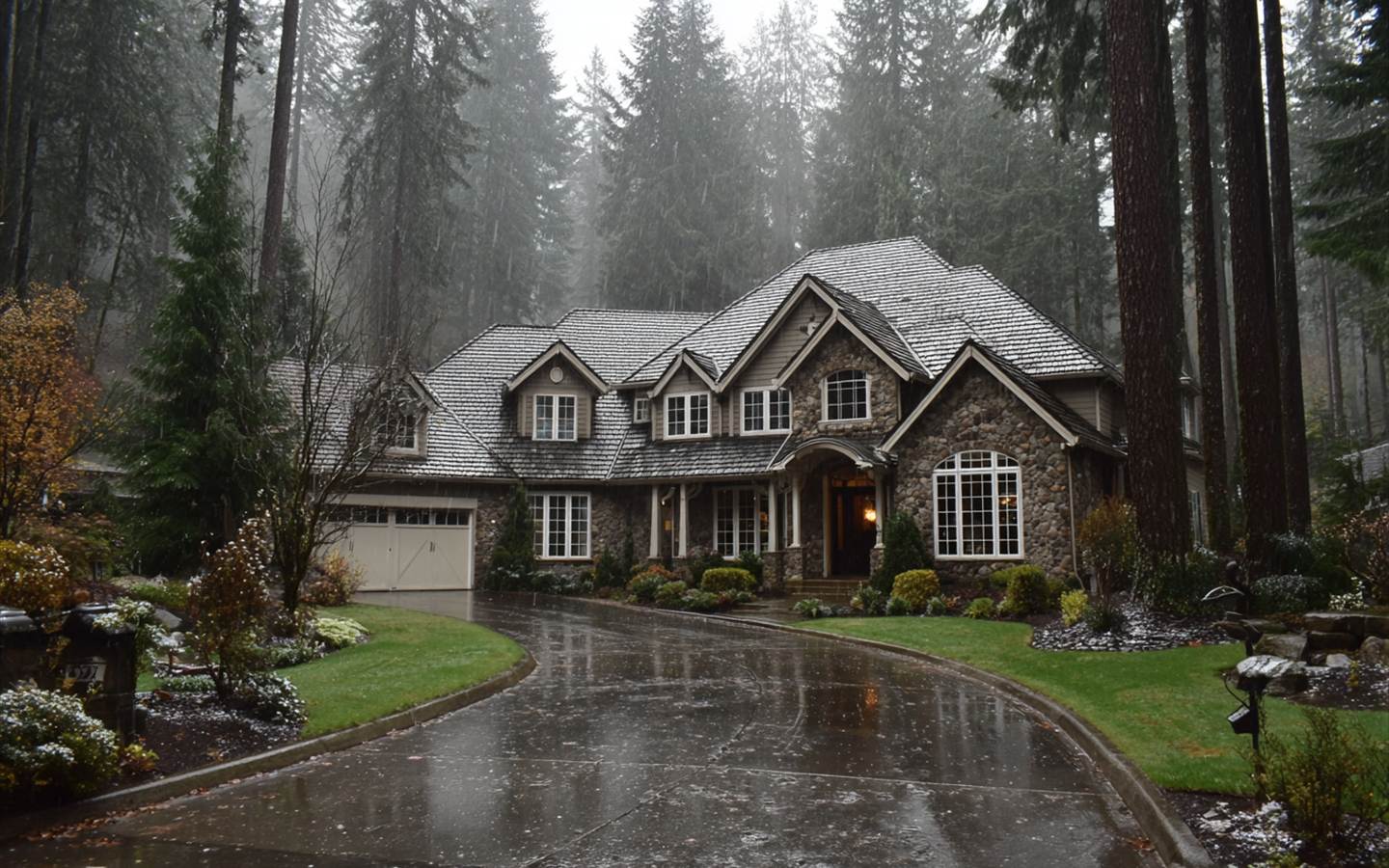
Water damage restoration in Sammamish usually means three jobs in a row: mitigation to stop and dry the damage, removal of what can't be saved, and the rebuild that puts the rooms back. In a house of 3,000 or 4,000 square feet with several bathrooms, a laundry upstairs and a finished lower level, one failed fitting can reach two floors before anyone notices. Call (425) 671-1846 and an independent restoration company that works on the plateau will answer.
Sammamish is a plateau of large, newer homes. The city sits on high ground between Lake Sammamish to the west and the Snoqualmie Valley to the east. Most of its houses went up from the 1980s through the 2010s, on wooded lots in subdivisions with their own storm ponds and homeowners associations. About 83% of homes are owned by the people living in them, and the median owner-occupied home is valued at more than $1.2 million.
The lakes and the valley change the picture. Pine Lake, Beaver Lake and the Lake Sammamish shoreline put some houses close to the water table. Down the hill, Fall City, Carnation and Duvall sit on the Snoqualmie River floodplain, where winter floods cover farmland and roads.
What this site is. Sammamish Water Damage Restoration is a website and a phone number. The company that answers is a separate, independent business. That company inspects, explains what the job needs and prices it.
Decide: whether the water has stopped. If it hasn't, close the nearest shutoff before anything else.
Big houses have more plumbing in more places, and some of it sits over finished rooms. These five account for most of the calls.
Bonus rooms sit over unheated garages with plumbing and roof valleys nearby. Water shows up late, as a stain on a sloped ceiling, after it has soaked the insulation above. Water in the bonus room? (425) 671-1846. Restoration
A second-floor laundry is convenient until a hose bursts. It can put several gallons a minute through the subfloor into the kitchen or great room below. First the water, then the walls: (425) 671-1846. Water removal and cleanup
Large showers, soaking tubs and double vanities mean more seals, drains and grout lines. Slow leaks there wet the subfloor for months before a ceiling below gives them away. Mitigation first, repairs after: (425) 671-1846. Mitigation and drying
Many plateau homes have two water heaters, a recirculation pump and long supply runs. A tank that fails in a mechanical room or garage spreads water under walls into finished space. First the water, then the walls: (425) 671-1846. Big-house plumbing
Daylight basements on sloped lots hold media rooms, gyms and guest suites. Water arrives from the hillside after long rains or from plumbing on the same level. Lower level wet again? (425) 671-1846. Finished basements
These three words get used interchangeably. On a Sammamish job they mean different phases, and sometimes different companies.
Stopping the damage from growing: extracting water, removing soaked pad and drywall, and drying the structure with air movers and dehumidifiers until readings match dry areas. Decide: who gives the crew access if you're not home. Water mitigation and drying
The whole job, mitigation through rebuild, managed as one project. Most people searching for water damage restoration mean this. Decide: whether one company handles both halves or the rebuild goes to someone else. Water damage restoration
Putting back what came out: drywall, flooring, cabinets, trim and paint, matched to what's already in the house. Decide: whether the HOA needs to see anything before exterior work starts. Repair and rebuild
When the Snoqualmie climbs past flood stage at the Carnation gauge, farmland and roads go under from Fall City through Duvall. Plateau or valley, same number: (425) 671-1846.
Call (425) 671-1846The same company may serve both, but the houses face different water.
| On the plateau | In the valley | |
|---|---|---|
| Water supply | City or district water | Many homes on private wells |
| Drainage | Subdivision storm ponds, swales and yard drains | River, sloughs and low fields |
| Usual outside water | Hillside seepage into lower levels after long rains | Snoqualmie or Tolt river flooding, runoff at low doors |
| Usual inside water | Upstairs laundries, primary baths, water heaters, ice makers | Pressure tanks, pump houses, frozen lines in outbuildings |
| Worth telling the company | Which floor, and whether a finished room is below | Whether the water came from the river or from a pipe |
More on valley water systems: Valley wells and pump houses. More on the plateau's drainage: Storm ponds and big-lot drainage.
The whole project, from the first readings to the last coat of paint. Mitigation first, repairs after: (425) 671-1846. Restoration
Extraction, removal of what can't stay, and measured drying. First the water, then the walls: (425) 671-1846. Mitigation and drying
Standing water from a hose, a tank, or the river. First the water, then the walls: (425) 671-1846. Water removal and flood cleanup
Finishes, cabinets and floors matched in houses that were built custom. Mitigation first, repairs after: (425) 671-1846. Repair and rebuild
Media rooms, gyms and guest suites below grade. Lower level wet again? (425) 671-1846. Finished basements
The leak nobody sees until the trip is over. Away from home and got the alert? (425) 671-1846. Homes left empty
The plateau
Along the lakes
Down in the valley
North of the plateau
Decide: if you're away, who nearby has a key and knows where the shutoff is.
Size changes three things: how far water travels, how long drying takes, and how hard finishes are to match. A leak in a 1,600-square-foot rambler usually stays in one or two rooms. In a two-story plateau home with an open great room, water can travel along joists under a long run of hardwood, down a chase beside the stairs, and into a lower-level ceiling. Drying a large open space takes more equipment and more days, and wide-plank hardwood, custom cabinetry and stone counters make repairs slower to match. None of that changes the first step: stop the water, then get it measured.
No. Mitigation is the first phase: stopping the damage, extracting water and drying the structure. Restoration usually means the whole project, mitigation plus the rebuild. A few firms handle both phases; plenty pass the rebuild to a general contractor. Ask which you're getting.
Someone local with a key, who knows where the main shutoff is. Many owners also add leak sensors near water heaters, washers and under sinks, and some install an automatic shutoff valve. If the house will be empty in winter, keep the heat on.
Inside the house, usually not. Exterior work, like siding, windows, roofing or anything visible from the street, often does under plateau HOA rules. Check your covenants before the rebuild starts. See HOA approvals for repairs.
The room over the cold space, and why water hides there.
The first hour when nobody's in the house.
Recirculation pumps, mechanical rooms and more places for a leak to start.

